Some of the truly profound moments of this journey so far have been in near darkness. Often these moments have also been in places where photos are forbidden, even when they would be next to impossible to take anyway.
The lack of light renders things that I thought I knew appear very different. One of these things has been the experience of icons.
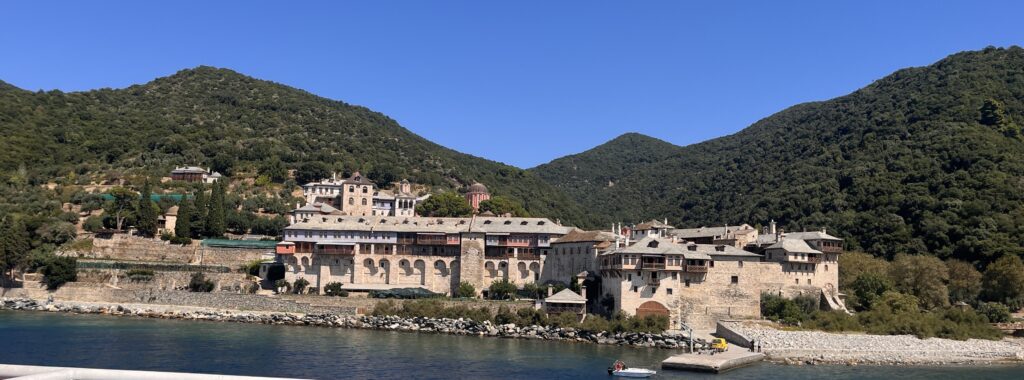
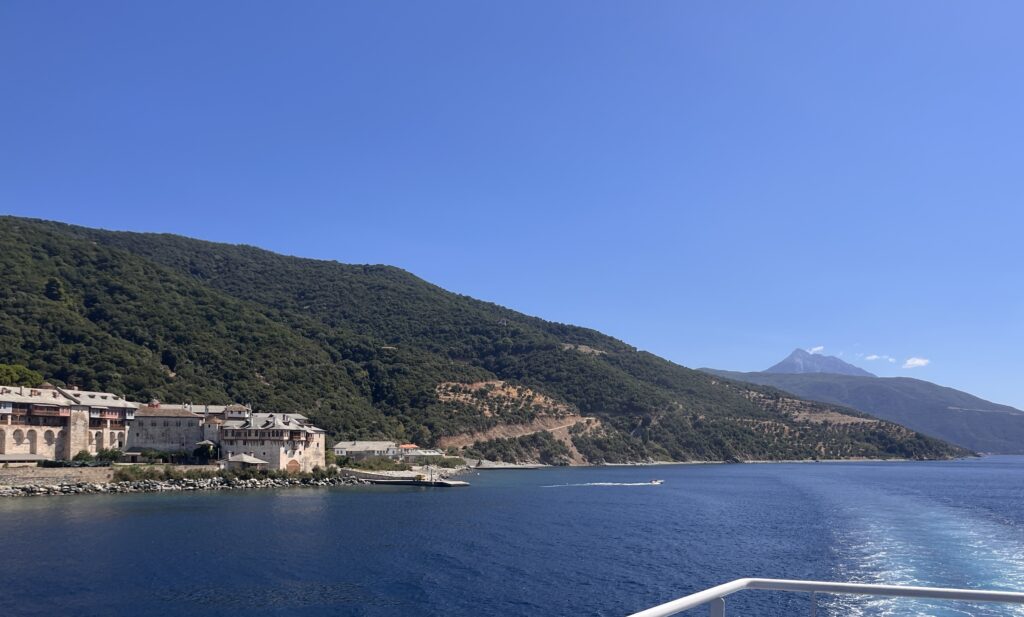
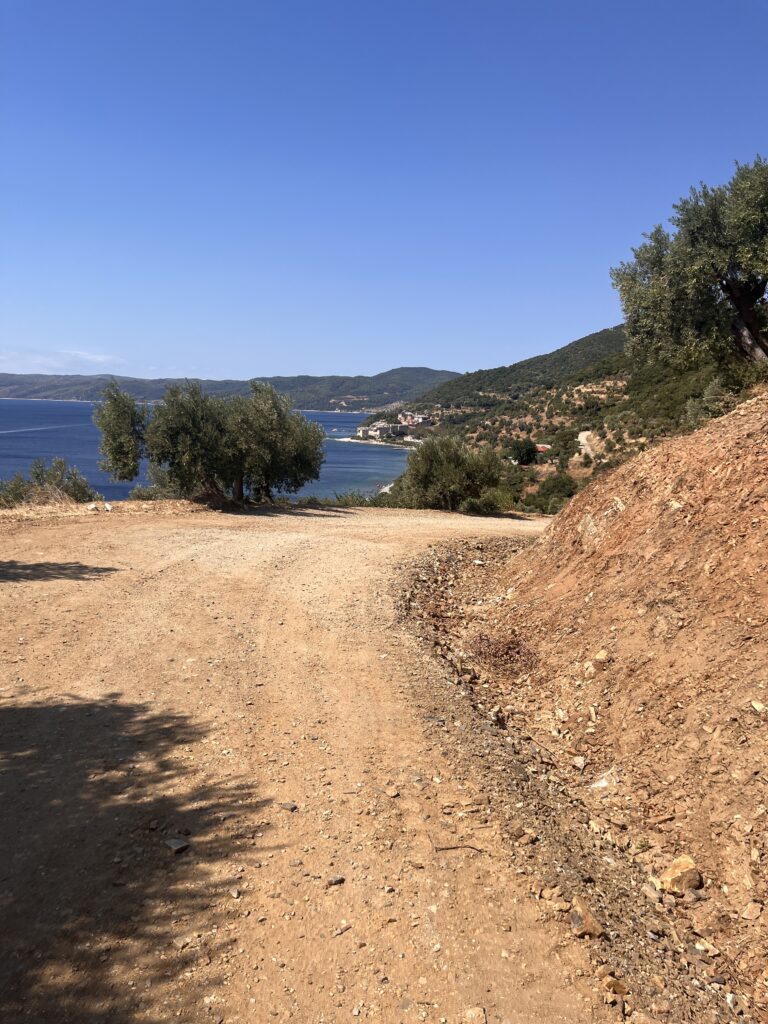
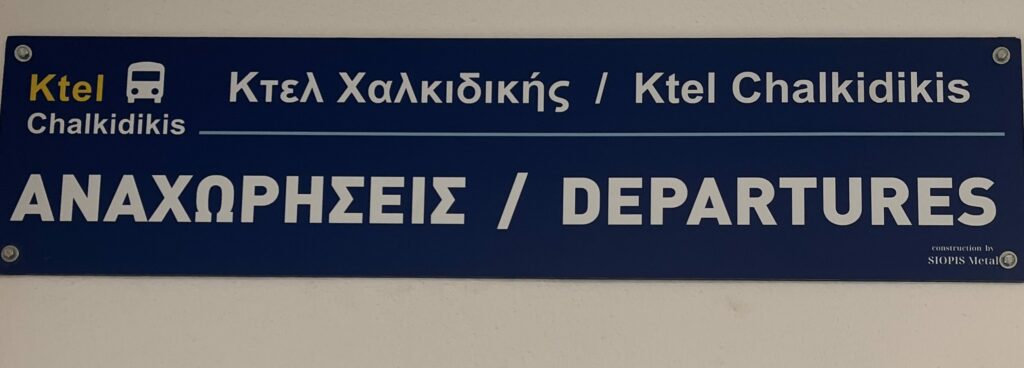
I visited “The Holy Mountain,” Mount Athos, in Greece, with a Jesuit friend of mine over September 7–8. This is one of the great centers of holiness in Eastern Orthodox Christianity, where more than twenty monasteries (and many other smaller gatherings of hermits) exist on a long narrow peninsula that stretches into the Aegean sea. The monasteries welcome only male visitors, and people come from all over the world to pray and join with the monks in the simplicity of their way of life. In the ancient Church this movement away from civilization was called in Greek anachoresis, and it was amusing to see that in modern Greek the same word is used in bus stations and airports.
When I had arrived at Xenophontos monastery the afternoon of Sept 7, I had joined in evening prayer in the large Church, and I had seen nearly every surface covered in icons, radiant, presenting the faces of the saints and the stories of the Bible in colors both glorious and austere. The next morning we rose at 3:45am to join the monks for morning prayer and the divine liturgy (though we were unable to receive communion with them, since they do not allow intercommunion with Catholics). In the dark church, the only illumination was from a few lamps lit before some of the most prominent of the icons. In such spare, flickering light, the icons now seemed transformed. The faces of the saints and of Christ were almost invisible, reflecting almost no light, while the halos and the shimmering gold background reflected the lamp’s glow back to the eyes of the believer.
It was very moving, to see the icons in this way. That which my normal sight was hungering for, the recognizable human features of eyes and face and hands, these receded, still present but nearly invisible. That which represented the glory of the Lord, the sanctifying and deifying power of God, the golden radiance, this was all that was left.
As the prayer went on and the sun rose, the few windows in the Church began to transmit the sun’s rays from the church’s dome down into the nave, and the faces and hands of the icons slowly became more visible again. Yet even in the balanced light of day the experience of having seen the icons illuminated only by flickering lamps had changed how I see them forever.