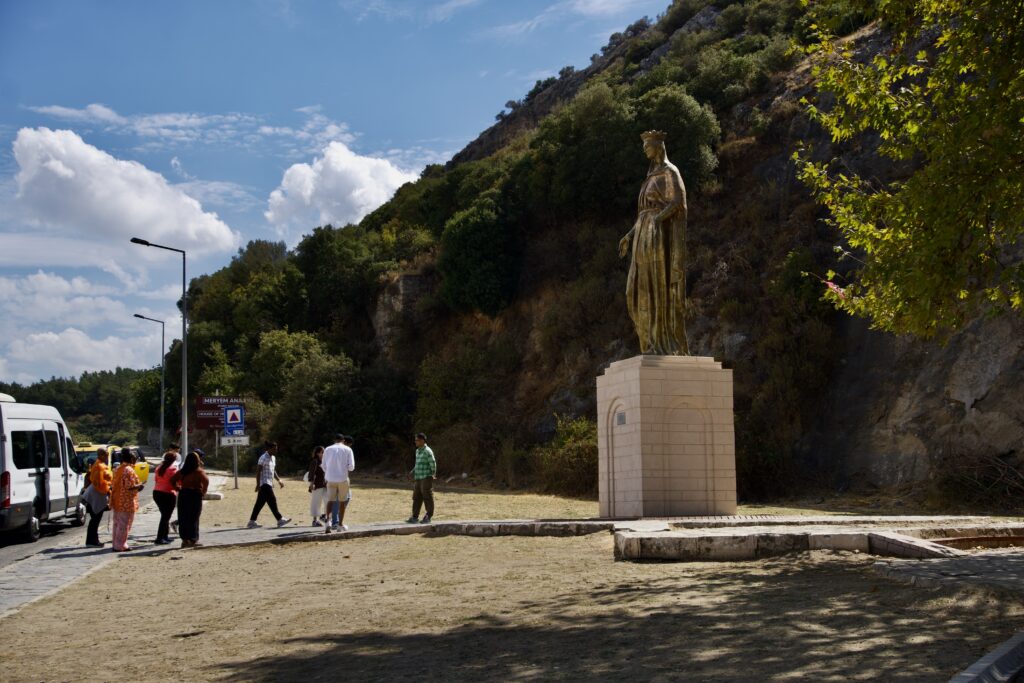
On September 16, my day began and ended with Mary. I began the day outisde the town of Selçuk, Türkiye, the site of ancient Ephesus, at the top of the “Nightingale Hill,” as the taxi driver told me it was called in Turkish. We swept past a gigantic gold statue of Mary, the Mother of God: “Your government built that,” he said, with a smile.
My first destination was Meryem Ana Evi, the house of the Virgin Mary, where I was to concelebrate the 10:30am mass. I sent a text message to let the Franciscans know I had arrived, and I sat outside the house of the Virgin, facing a lovely small olive tree.
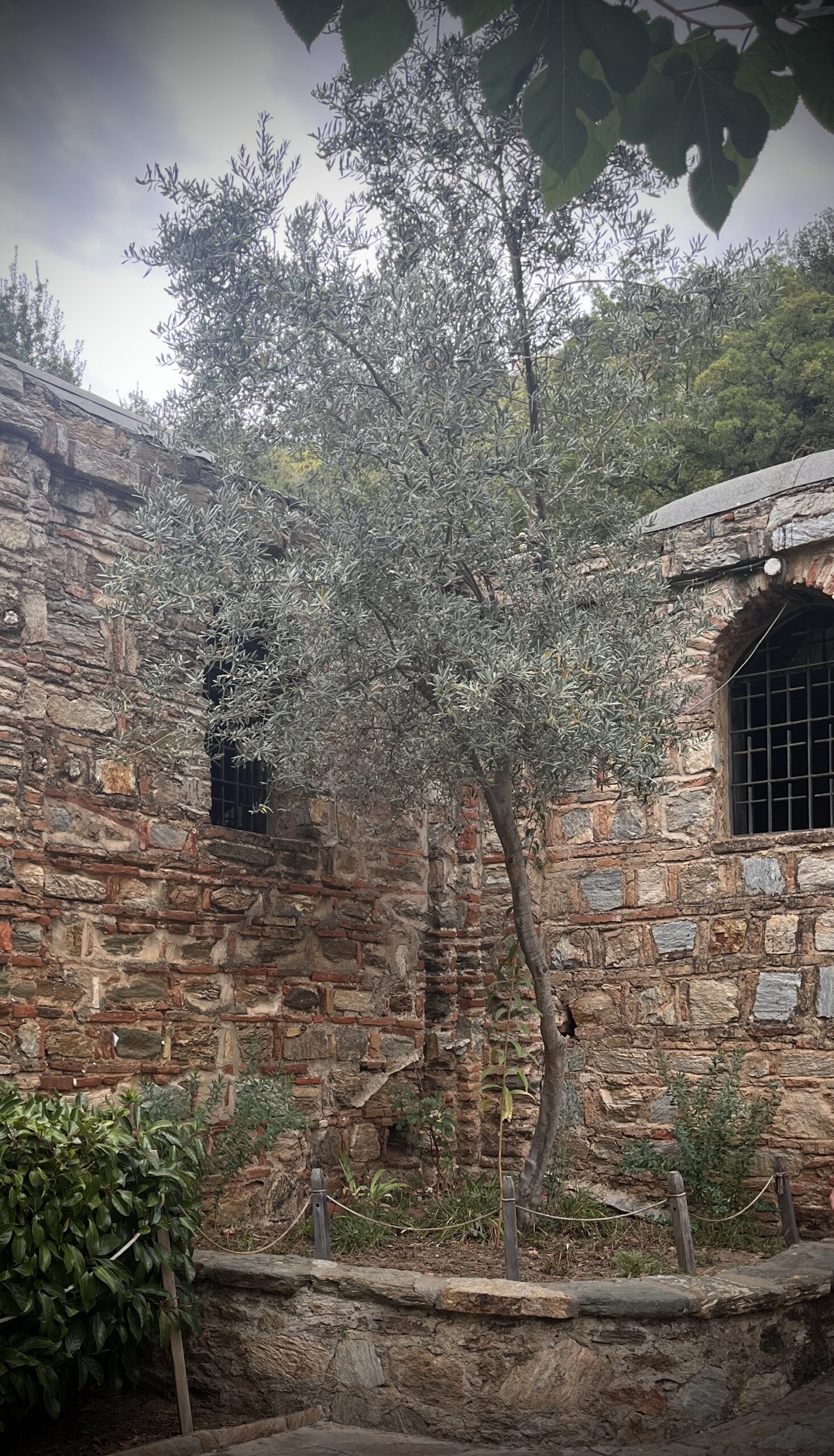
A very kind Italian sister introduced herself. “Come,” she said, once she confirmed I was a priest, “You can pray inside.” I was swept along and tucked in a corner as a seemingly endless procession of pilgrims filed past. There, in a building whose core is claimed to go back to the first century, I sat and prayed the Rosary.
The discovery of this house and its status as a shrine to Mary arose only in the 19th century, when Catholics not far away in Izmir decided to go exploring. They had read writings that claimed to be miraculous visions of the life of Christ revealed to a German woman, Anne Catherine Emmerich. The writings also included descriptions of where the Virgin Mary had lived in Ephesus with the Apostle John after fleeing persecution in Jerusalem. These local Christians decided to test the visions and see whether any of the geographic descriptions in the text matched the reality. To their surprise, they were not only stunned to find a match of the descriptions of the terrain, but they also found a ruined house. Over the following decades more investigations were done seeming to confirm the antiquity of parts of the buildings as far back as the first century, and to show Christian activity around the house extending up through the seventh. The site gradually received visits from pilgrims, and these accelerated after World War II. Now it is a regular site on the pilgrim tours and hundreds, perhaps even thousands, of people come each day in the high season.
It is hard to know what to make of the site. I certainly wanted to see it and to pray there. The house fits into a larger question that has been around for centuries, namely that there were always seemingly two traditions about where Mary lived and died, one focused on Jerusalem and one on Ephesus. In this sense, this house would seem to be a movement of popular religion weighing in strongly in favor of the Ephesus tradition. But from the perspective of scholars, there would be high danger of confirmation bias in following directions of a purported visionary to a location. You would want to find something, and whatever you found you would make fit a narrative. So it is unlikely scholars would ever feel comfortable making any positive affirmation about the site as the residence of the Virgin Mary.
Even as a site for pilgrims, there is an added difficulty of its remote location in a country with an extremely small Catholic population. But this has led to unexpected features. After mass, one of the Capuchin Franciscans gave me a tour. He mentioned how moved he has been to meet people of many different Christian backgrounds, of many other faiths (especially of Islam), and even atheists who have profound experiences at the shrine. He was elaborating on some of the difficulties of being a Catholic pilgrimage site in a mostly non-Christian country, when he paused and said, “But I think our Lady wants it this way. Without hotels, without lots of shops, she wants this to be a place of quiet and peace. And people find peace here.”
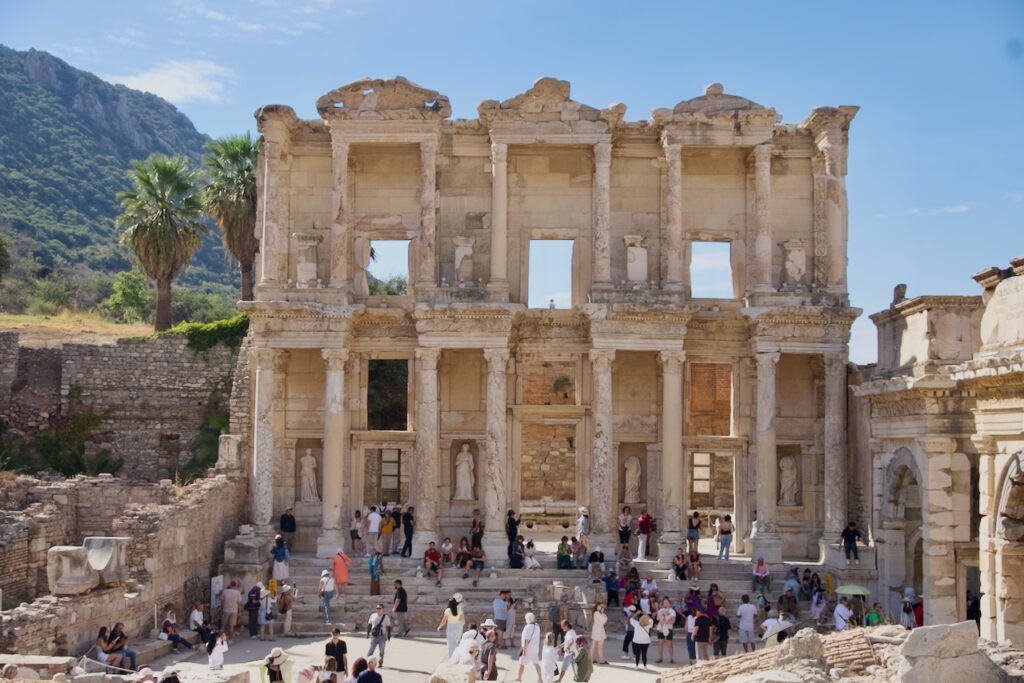
From there, I left the shrine and walked for an hour down the hill to the massive excavations of the ancient city of Ephesus itself. These had been undertaken by a team of Austrian and Turkish archaeologists over many years, and they are beautifully preserved and reconstructed, deservedly world-famous.
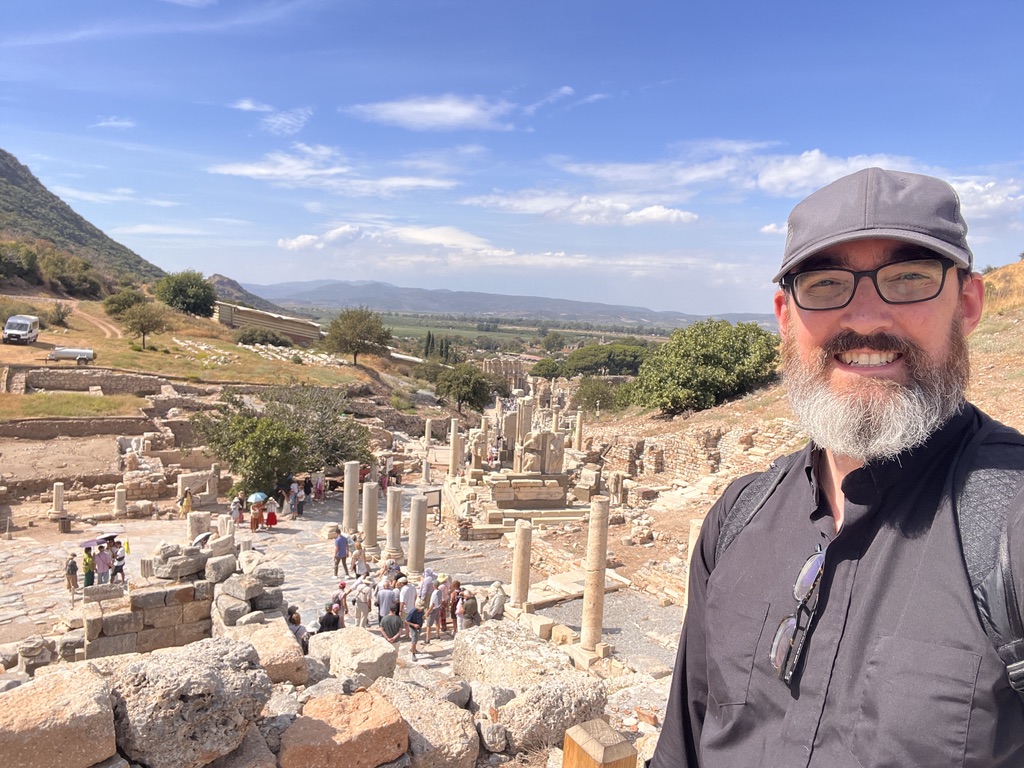
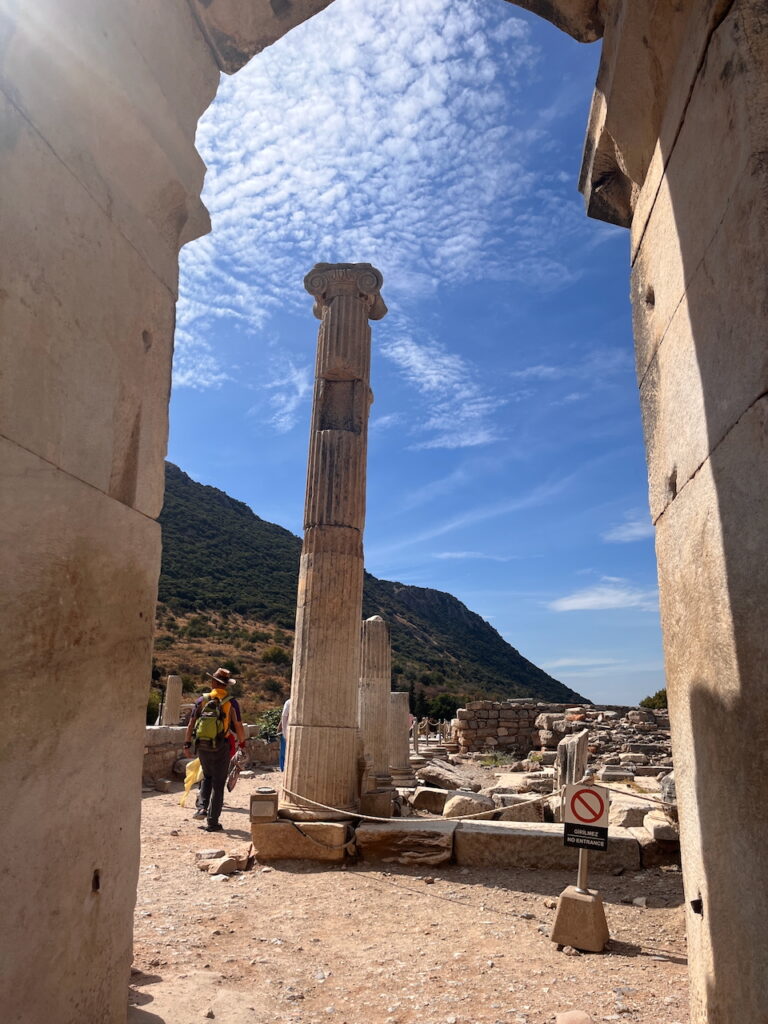
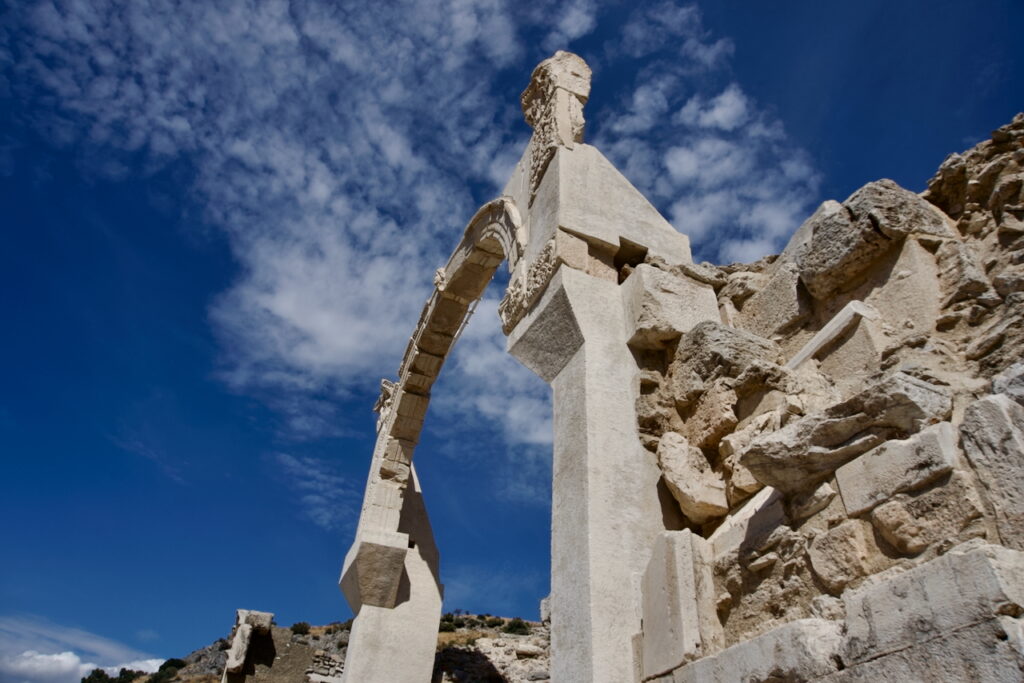
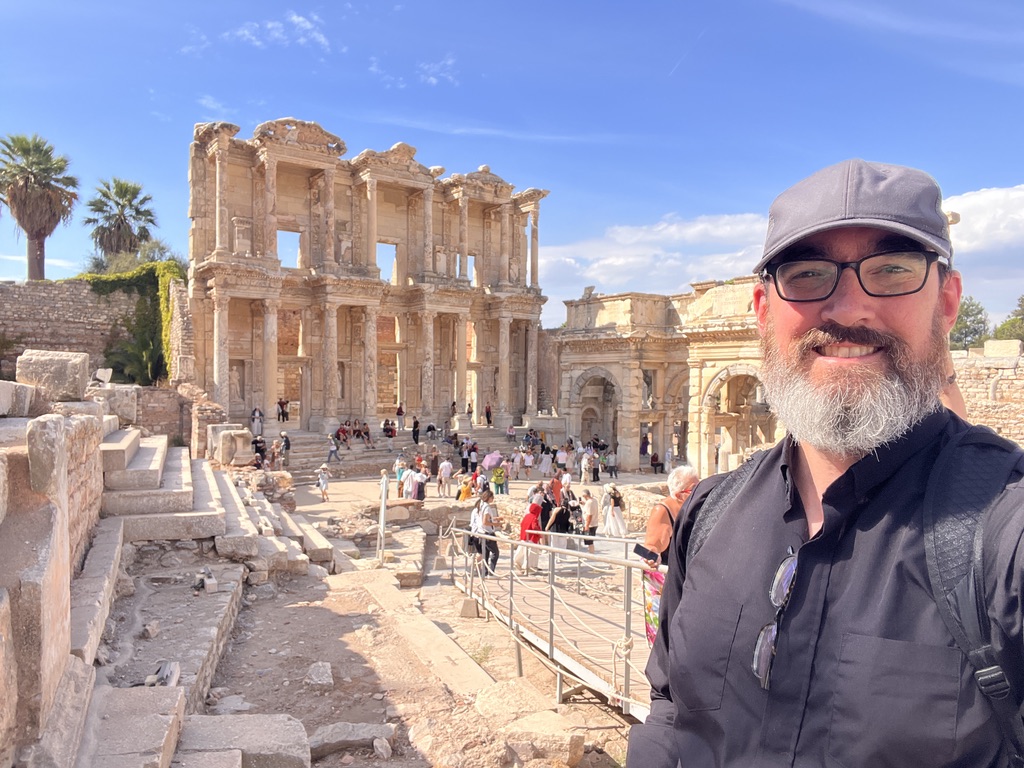
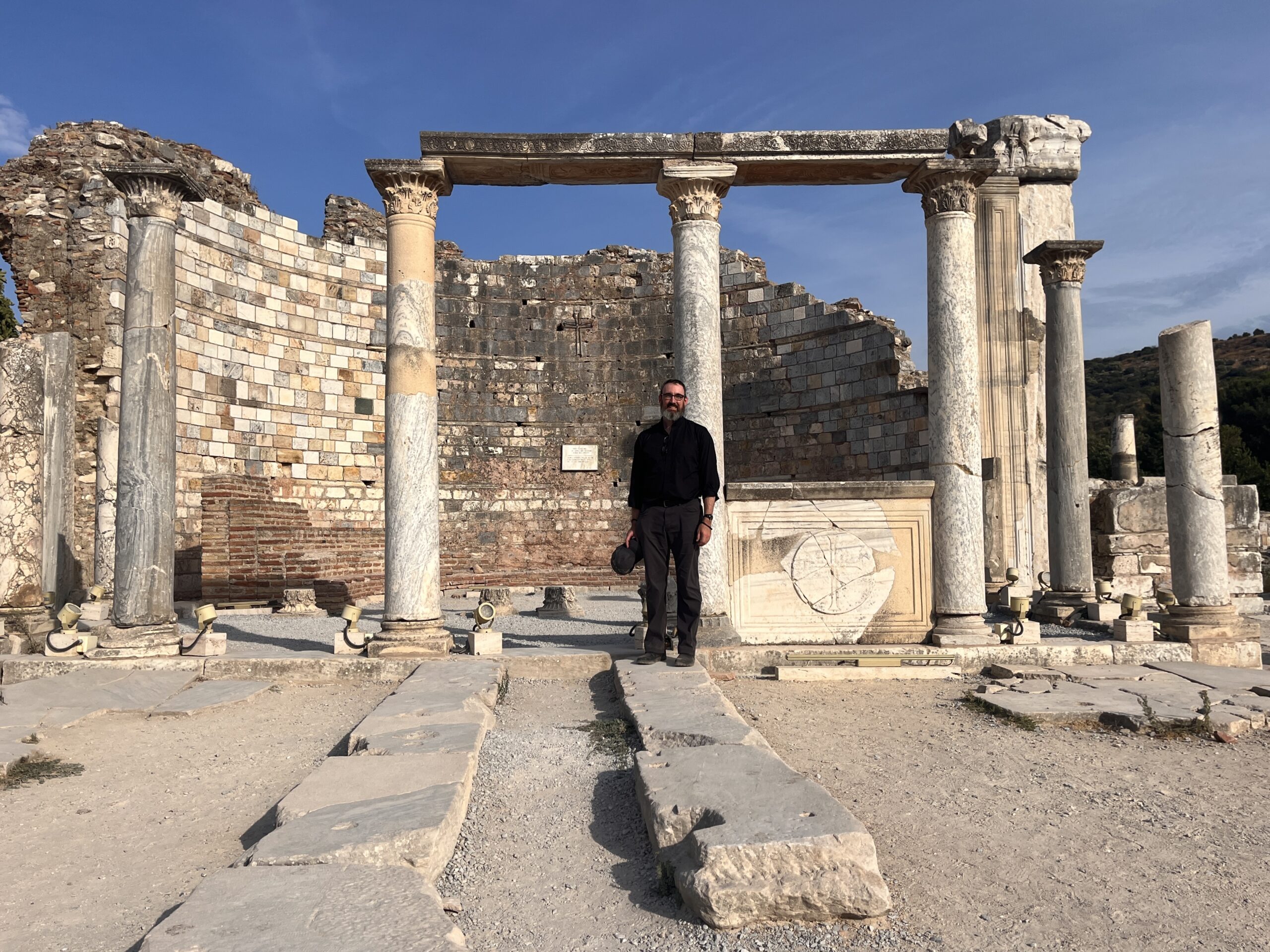
After walking through the entire city, one of the last things I came to were the ruins of the ancient Church of Mary. It is at that church that bishops from much of the eastern Christian world gathered in the year 431. One line of their decrees speaks of a bishop, Nestorius, whom the assembly would go on to condemn. But in describing his movements, they spoke of his coming to “Ephesus, where are John the Divine and the holy Virgin Mary the Theotokos.”1 Some scholars take this to refer to the Churches in the city dedicated to John and Mary.2 But when you combine that reference with the Ephesus tradition in other texts, and when you notice that this reference refers to the persons and not, as in other cases, to the Churches, it can be read as another piece of data supporting the connection of Mary with Ephesus.
At that council, the bishops decided to affirm that Mary should be known and proclaimed as Theotokos, God-bearer. It communicated a sense of her power, but a power that was not due to her, but due to the fact of who her Son, Jesus Christ, truly was: the eternal Word of God made flesh for us.
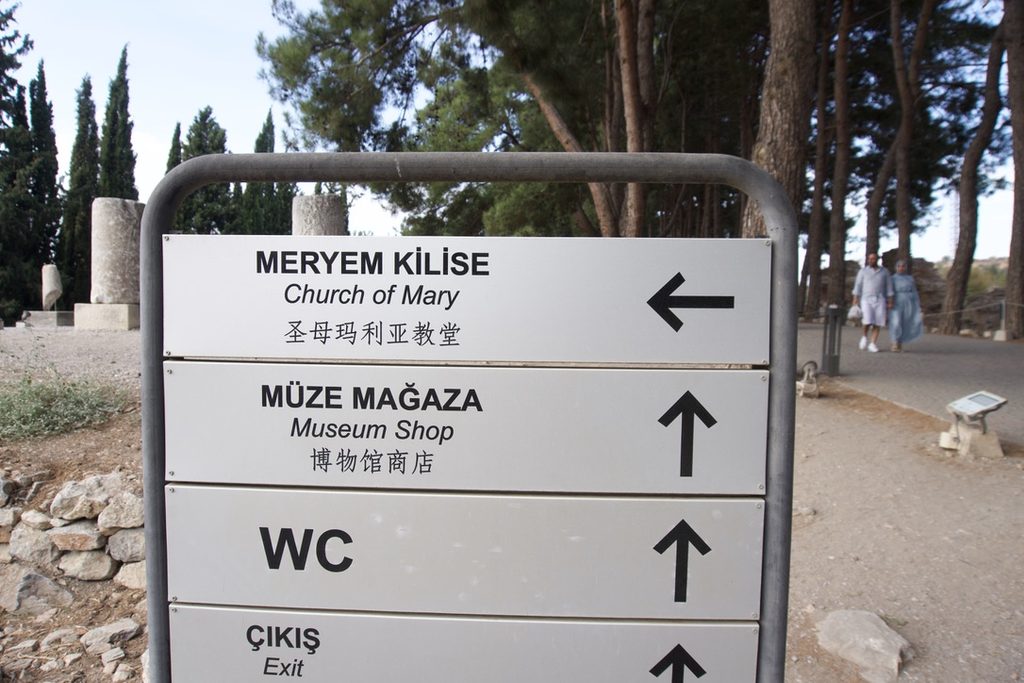
At the end of my long walk through the excavations of Ephesus I found the series of signs pointing off the main path to what, from a distance, look like rather unremarkable ruins.
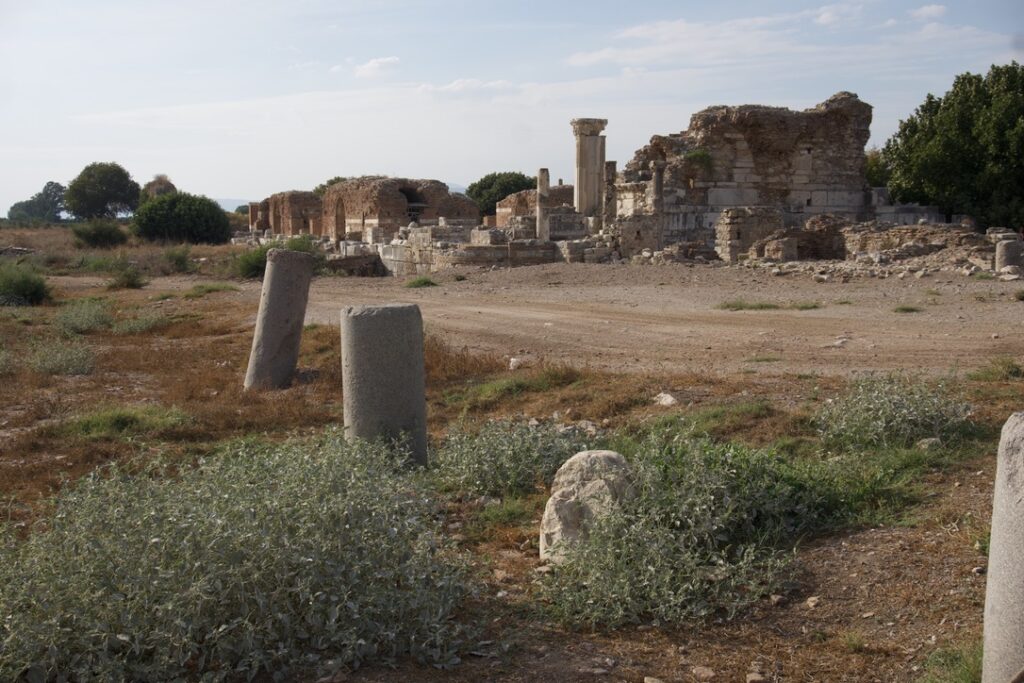
By a series of earthquakes and invasions and erosions, that Church where the council gathered near the harbor of Ephesus fell into disuse and was forgotten until it was excavated much later. But what was proclaimed of Mary, and the intercession that her unique mission made possible, this still has a place there. People who look for the Church find it.
At the end of my long day, one that began and ended with Mary, I found myself recalling repeatedly what it says in the Liturgy of St. John Chrysostom, on the feast of Mary’s Dormition, “In falling asleep, you did not forsake the world, O Mother of God.” She did not forsake the world, and somehow, as a location of deep devotion, she did not even forsake Ephesus.